

LEARNING

What is Cannabis?
What is Medical Cannabis?
Cannabis Classification and
its Two Key Components
What is Medical Cannabis?
Cannabis Classification and
its Two Key Components
- What is Medical Cannabis?
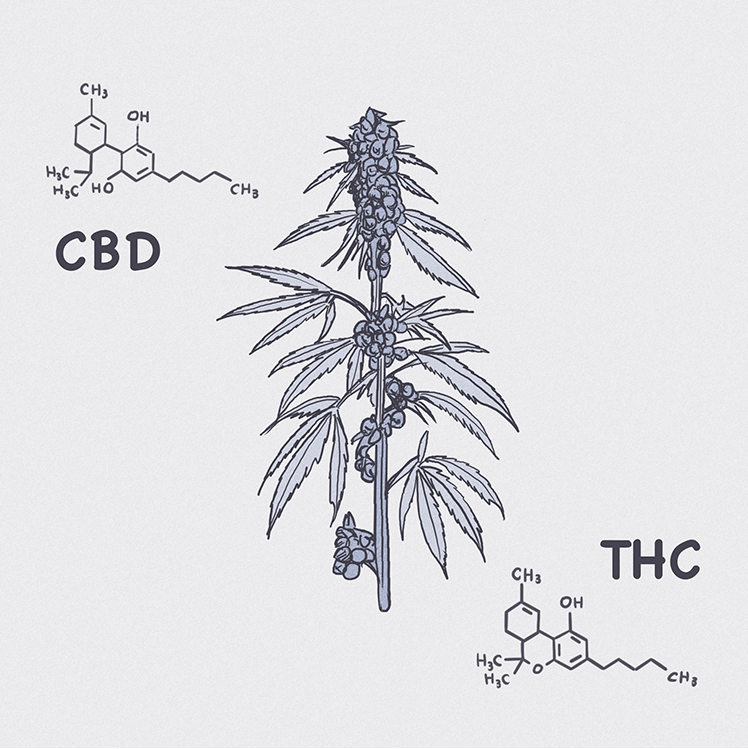
- Cannabis (Cannabis sativa) contains over 120 types of cannabinoids and various other components. Among them, the two most researched and widely used cannabinoids are tetrahydrocannabinol (THC) and cannabidiol (CBD). Medical cannabis products may have THC as the main component, CBD as the main component, or a combination of both. Each has been studied for its therapeutic effects.
- THC (Tetrahydrocannabinol)
- THC is known for its effects in pain relief, reducing nausea, suppressing spasms, and stimulating appetite. However, consuming THC in large quantities can overstimulate the brain, causing a “high.” That said, low doses do not typically lead to this state.
- CBD (Cannabidiol)
- CBD is recognized for a wide range of therapeutic benefits, including anti-anxiety, anti-epileptic, neuroprotective, vasorelaxant, anticonvulsant, anti-ischemic, anti-cancer, antiemetic, antibacterial, antidiabetic, anti-inflammatory properties, and bone growth promotion. Additionally, CBD can modulate the effects of THC and endocannabinoids.
- Medical Cannabis Products
- Medical cannabis broadly refers to cannabis-based products intended for medical use. In legal and medical terminology, they are often called “Cannabis-Based Prescription Medication (CBPM).” These products come in various forms, including capsules, tablets, oils, sprays, and buds (cannabis flowers). In Japan, due to recent legistlative amendments, only cannabis-derived medicines that have undergone clinical trials and received approval will be legalized. Smoking buds for medical purposes is not permitted, making Japan’s legalization different from that in Western countries.
- The Difference Between Industrial Hemp and Medical Cannabis
- When discussing cannabis, Western countries clearly distinguish between “hemp” and “cannabis” based on legal definitions. In Europe, cannabis with more than 0.2% THC by dry weight is classified as cannabis, while anything below that is considered hemp. In the U.S., cannabis is defined as cannabis with more than 0.3% THC. With legal changes in Japan, licenses for cultivating medical cannabis and industrial cannabis (hemp) will likely be separated.
What are the Benefits of Cannabis?
Medical Conditions with
Potential Therapeutic Effects
What are the Benefits of Cannabis?
Medical Conditions with Potential Therapeutic Effects
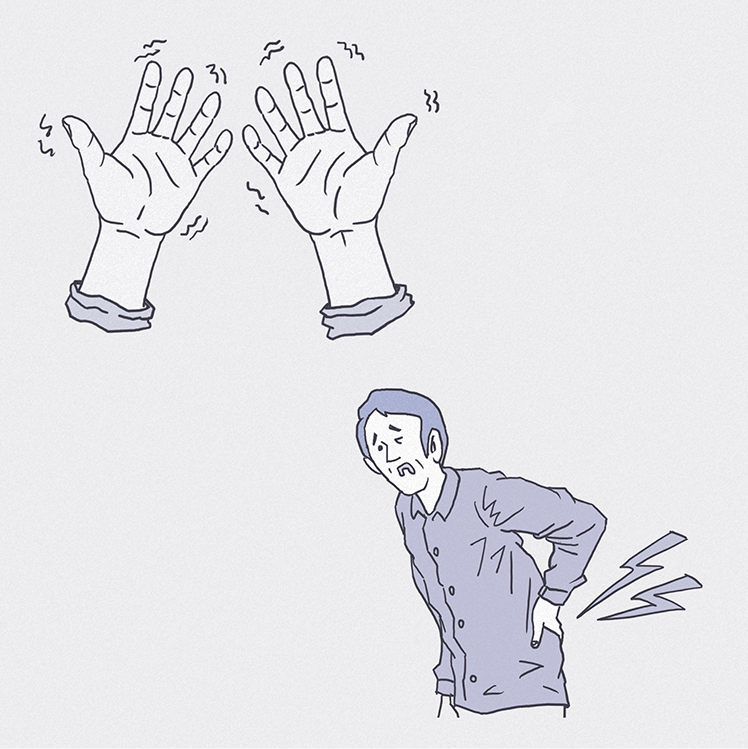
Medical cannabis shows promise for a wide range of symptoms, including rare diseases that have lacked effective treatments until now.
- ・Pain Symptoms
- ・Chronic Pain
- ・Fibromyalgia
- ・Migraine
- ・Cluster Headache
- ・Neuropathic Pain
- ・Cancer-Related Pain
- ・Ehlers-Danlos Syndrome
- ・Palliative Care
- ・Mental Health Disorders
- ・ADHD
- ・Anxiety Disorders
- ・Agoraphobia
- ・Autism Spectrum Disorder
- ・Depression
- ・Insomnia
- ・Obsessive-Compulsive Disorder (OCD)
- ・PTSD (Post-Traumatic Stress Disorder)
- ・Tourettes Syndrome
- ・Neurological Symptoms
- ・Autism Spectrum Disorder
- ・Epilepsy
- ・Migraine
- ・Cluster Headache
- ・Multiple Sclerosis
- ・Neurogenic Pain
- ・Parkinson’s Disease
- ・Gastrointestinal Conditions
- ・Crohn’s Disease
- ・Ulcerative Colitis
- ・Irritable Bowel Syndrome (IBS)
- ・Cancer-Related Conditions
- ・Anxiety
- ・Nausea and Vomiting
- ・Loss of Appetite
- ・Depression
- ・Palliative Care
What is the Endocannabinoid System (ECS)?
What is the Endocannabinoid
System (ECS)?
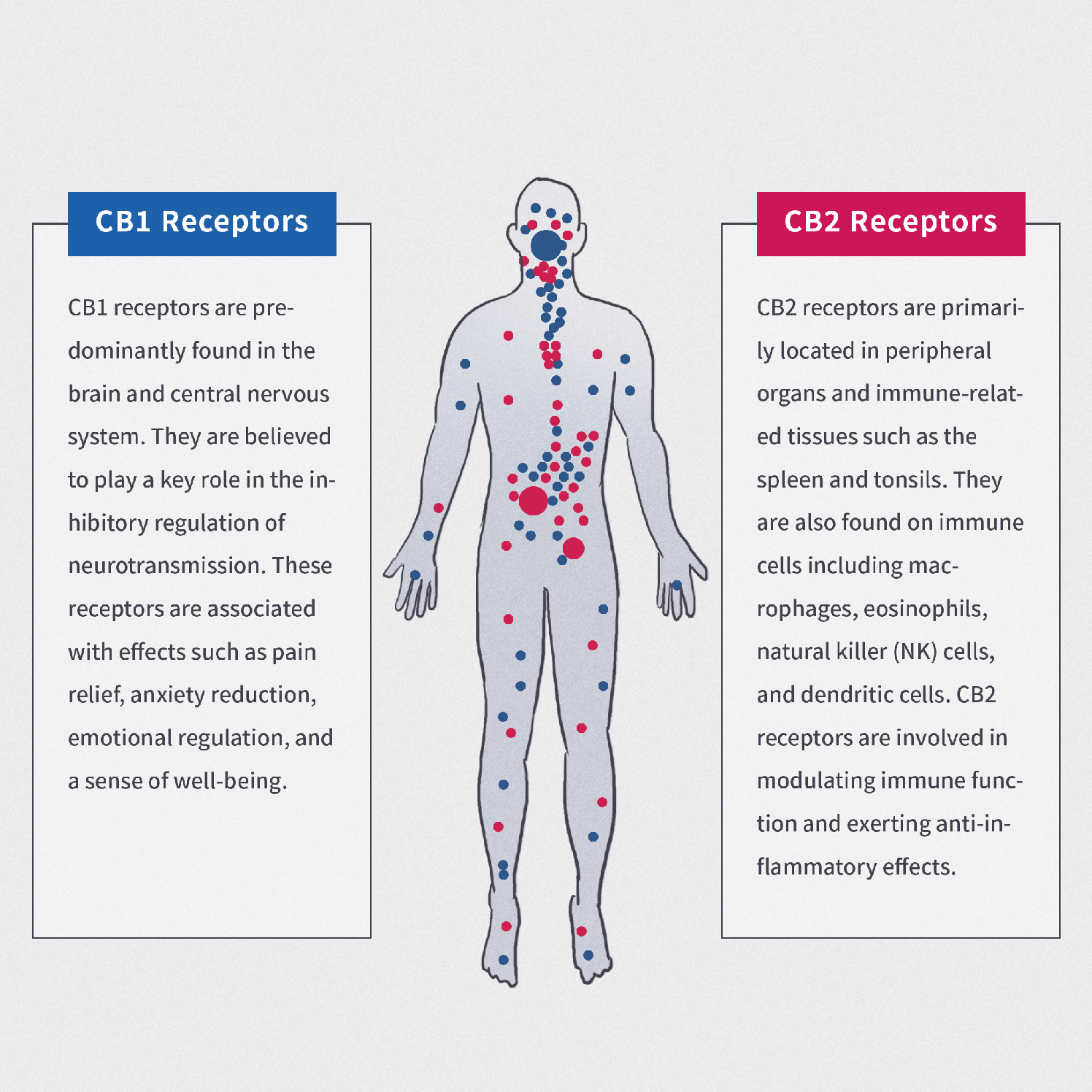
The Endocannabinoid System (ECS) is a neuroregulatory system expressed throughout the central nervous system and immune system in humans. It consists of neurotransmitters (known as endocannabinoids), receptors, and enzymes. Both endocannabinoids and plant-derived cannabinoids from cannabis can interact with these receptors, known as CB1 and CB2. The ECS has been shown to play a role in regulating many physiological and cognitive functions, including mood, memory, appetite, body temperature, hormone levels, pain signaling, and inflammation.
Cannabis and cancer:
When THC connects to the CB1 or CB2 cannabinoid receptor site on the cancer cell, it induces an increase in ceramide synthesis that leads to cell death. A normal cell does not produce ceramide when it is near THC; therefore it is not affected by the cannabinoid.
The presence of ceramide leaves no possibility of cancer cell survival. This is because it causes genotoxic stress in the cancer cell that generates a protein call p53, which disrupts the calcium metabolism in the mitochondria. Ceramide also disrupts the cell’s digestive system that produces nutrients for all cell function, and actively inhibits pro-survival pathways.
The key to the cancer killing process is the accumulation of ceramide in the system. This means that by taking THC rich cannabis extract (with the minimum of 55% THC) ,at a steady rate over a period of time the patient will keep metabolic pressure on these cancer cell death pathways.
The Global Trend Toward Cannabis Legalization,
Decriminalization,
and Reduced Penalties
The Global Trend Toward Cannabis Legalization,
Decriminalization,
and Reduced Penalties
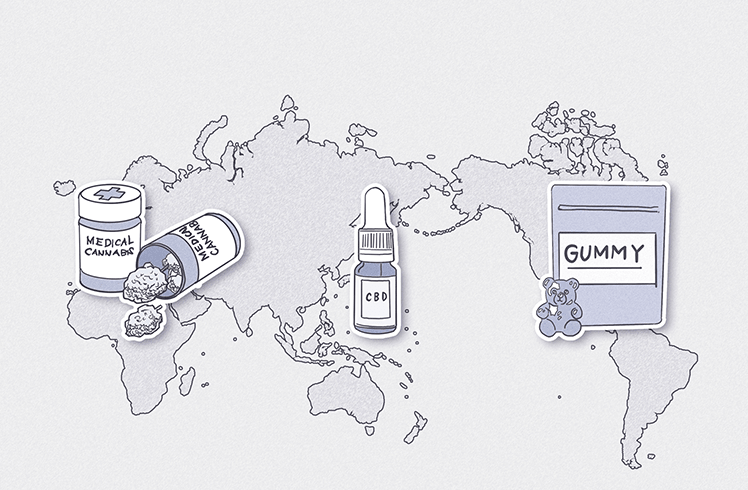
Medical cannabis is legal in 51 countries worldwide, and in the U.S., it is legal in 43 states and territories. Many developed nations are progressing toward decriminalization and reduced penalties for cannabis use. In Japan, however, only cannabis-derived pharmaceuticals that have passed clinical trials are expected to become legal, unlike in Europe, where cannabis is also used as a traditional medicine or herbal remedy.
Globally, in December 2020, the United Nations recognized medical cannabis and removed it from the “most dangerous” classification. In October 2022, U.S. President Joe Biden pardoned individuals convicted of simple cannabis possession. In April 2024, the U.S. Department of Justice, which oversees the Drug Enforcement Administration (DEA), recommended rescheduling cannabis from “Schedule I,” where it is classified alongside substances with high abuse potential like heroin, to “Schedule III,” which is defined by a moderate to low potential for physical and psychological dependence. This change is expected to boost research and expand the use of cannabis for medical purposes. In the same month, the German government legalized recreational cannabis use. In Japan, meanwhile, the first clinical trials for cannabis-based medications aimed at treating refractory epilepsy began in April 2022, leading to an amendment to the Cannabis Control Act. Consequently, a bill allowing the development, production, and cultivation of medical cannabis is set to be enacted in December 2023 and is expected to be enforced within 2024.
- Cannabis Pharmaceuticals
- Countries/Regions: Japan, South Korea, etc.
Product Types: Pharmaceuticals like Sativex, Epidiolex, Marinol, Cesamet, and others. These are rigorously tested in clinical trials and approved for specific conditions and symptoms.
- Recreational Cannabis
- Countries/Regions: Canada, Germany, Luxembourg, Mexico, Uruguay, U.S. states such as California and New York
Product Types: Cannabis flowers, oils, vapes, edibles (such as gummies and chocolates), beverages, etc. Recreational cannabis is used as a personal choice and is legally sold in regions where it is permitted.
- Medical Cannabis
- Countries/Regions: The European Union, Australia, New Zealand, Hawaii, Thailand, etc.
Product Types: Cannabis flowers, oils, vapes, tablets, etc. These products are used strictly for medical purposes and are generally prescribed by doctors as herbal or traditional medicine. They are utilized for managing conditions such as epilepsy, depression, sleep disorders, chronic pain, and alleviating side effects from chemotherapy.
Why Plant Factory?
The Strengths of Safe and Reliable
Plant Factory Technology
Producing pharmaceutical-grade cannabis requires strict quality control, making indoor cultivation the industry standard. Historically, cannabis was illegal in all countries until about ten years ago, and no businesses have cultivated medical cannabis on an industrial scale. KISEKI brings together top talent with expertise and know-how from Japan’s plant factory sector, using data-driven cultivation management. This approach reduces the risks of pests and quality inconsistencies, ensuring traceability, security, and consistency to deliver safe and reliable medical cannabis of Japan quality.
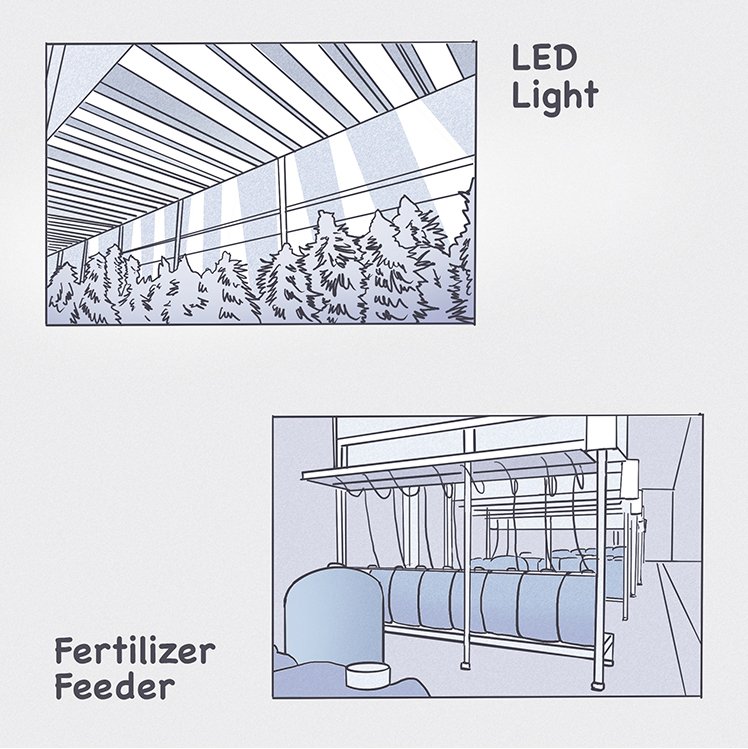
Within the facility, drip irrigation is used instead of traditional watering methods, reducing water usage to 1/50th of conventional practices. This enables precise delivery of nutrients in the exact quantities needed by the plants. Additionally, energy-efficient LED lighting is used in place of traditional HPS (High-Pressure Sodium) lamps, resulting in significant energy savings. These efforts support sustainable, environmentally friendly agriculture.
Leveraging these technologies and expertise, KISEKI is committed to producing high-quality, reliable medical cannabis while pioneering the future of sustainable agriculture.
Why Plant Factory?
The Strengths of Safe and Reliable
Plant Factory Technology

CONTACT
For inquiries, please contact us.